
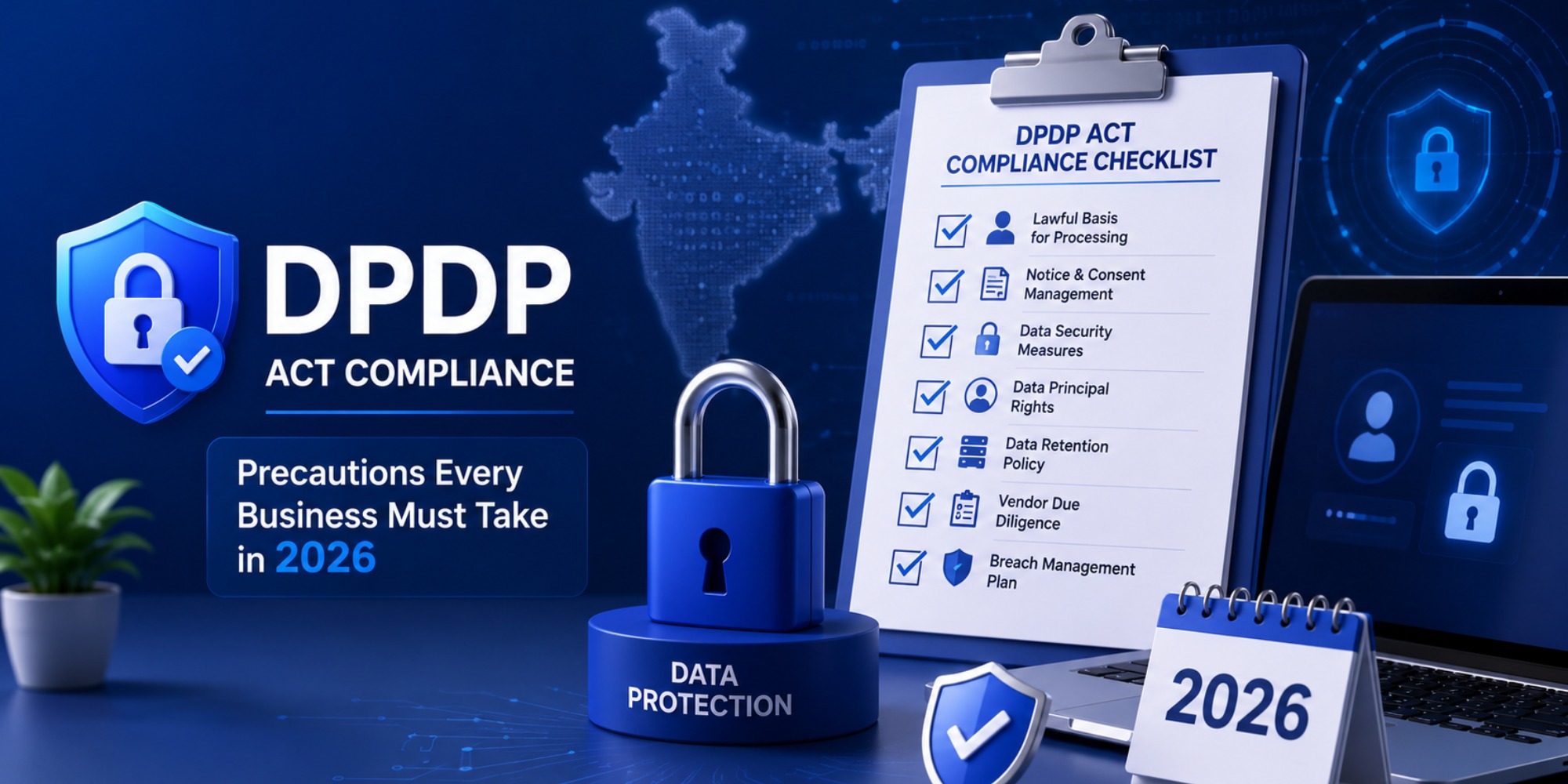
Customer data has become one of the most valuable assets for modern businesses. Every website inquiry, WhatsApp message, CRM entry, online purchase, and lead form generates customer information. With the implementation of India's Digital Personal Data Protection (DPDP) Act, businesses can no longer treat customer data casually. Companies that fail to protect customer information may face compliance challenges, operational risks, and loss of customer trust.
Brief Summary: DPDP Compliance Essentials
Collect Only Necessary Information
Avoid collecting customer data that is not required.
Maintain Transparency
Customers should understand why their information is being collected.
Secure Customer Records
Protect personal information from unauthorized access.
Control Internal Access
Only authorized employees should access customer data.
Use Reliable CRM Systems
Centralized systems improve accountability and security.
Table of Contents
Why the DPDP Act Matters
The DPDP Act introduces a new level of responsibility for businesses handling customer information.
Today, even small businesses collect personal information through:
Website forms
WhatsApp inquiries
CRM systems
Email campaigns
Lead generation ads
Mobile applications
The law encourages businesses to handle customer information responsibly and maintain transparency regarding how personal data is collected and used.
Customer data is no longer just a business asset. It is now a business responsibility.
Collect Only Necessary Data
One of the biggest mistakes businesses make is collecting excessive information.
If a customer is requesting a quotation, collecting unrelated personal information may be unnecessary.
The more customer data a business stores, the greater its responsibility becomes.
Businesses should collect only the information genuinely required for providing products, services, or communication.
Centralize Customer Information
Many businesses store customer information across:
Excel sheets
Employee laptops
WhatsApp chats
Emails
Personal mobile devices
This creates operational risks and makes customer information difficult to manage.
Centralizing customer records within a structured CRM system improves visibility, accountability, and security.
Control Employee Access
Not every employee should have access to every customer record.
Businesses should implement role-based access controls.
For example:
Sales teams access leads
Support teams access service requests
Finance teams access billing information
Restricting access reduces the risk of accidental exposure or misuse of customer information.
Review WhatsApp and Marketing Practices
Many businesses use WhatsApp as a primary communication channel.
However, customer phone numbers and communication history are forms of personal data.
Businesses should review:
Bulk messaging practices
Customer communication workflows
Marketing databases
Lead management systems
Proper processes help improve customer experience while maintaining better control over customer information.
Protect Customer Trust
Customers are becoming increasingly aware of data privacy.
Before sharing information, many customers want to know:
Why their data is being collected
How it will be used
Who can access it
How it will be protected
Businesses that communicate transparently often build stronger customer relationships.
Trust is becoming a major competitive advantage.
Train Employees on Data Privacy
Many privacy incidents are caused by human error rather than technology failures.
Employees should understand:
Data handling responsibilities
Security practices
Privacy expectations
Internal compliance procedures
Even the most advanced software cannot compensate for poor employee practices.
Why CRM Systems Are Becoming Essential
As businesses grow, managing customer information manually becomes difficult.
A modern CRM system helps organizations:
Store customer records centrally
Track communication history
Manage permissions
Monitor activity logs
Improve accountability
Businesses relying on scattered spreadsheets and manual processes may find it increasingly difficult to manage customer information efficiently.
CRM systems provide greater visibility, better control, and stronger operational discipline.
Common Mistakes Businesses Should Avoid
Collecting unnecessary customer data
Sharing customer information without controls
Using unsecured spreadsheets
Ignoring employee awareness
Managing customer records across multiple disconnected systems
Failing to review marketing practices
These mistakes may appear small initially but can create significant challenges as businesses scale.
Key Takeaways
The DPDP Act is changing how businesses manage customer information.
Organizations should focus on transparency, accountability, and responsible data handling.
Businesses that centralize customer information, improve internal controls, and strengthen security practices will be better positioned for the future.
Protecting customer data is no longer just about compliance. It is about protecting customer trust.
The Bottom Line
Businesses spend significant amounts of money generating leads and acquiring customers.
However, customer trust can be lost quickly if personal information is not handled responsibly.
The companies that succeed in the coming years will be those that treat customer data with the same importance as customer relationships.
In the DPDP era, responsible data management is becoming a key part of business growth.
Frequently Asked Questions
What is the DPDP Act?
The Digital Personal Data Protection Act is India's framework for regulating how businesses collect, process, store, and protect digital personal information.
Does the DPDP Act apply to small businesses?
Yes. Any business collecting or processing customer information digitally should review its data handling practices.
Why are CRM systems important under the DPDP Act?
CRM systems help centralize customer records, improve access control, maintain accountability, and support better data management.
Can WhatsApp marketing be affected by the DPDP Act?
Businesses using customer phone numbers and communication records should ensure customer information is handled responsibly and transparently.
What is the biggest benefit of DPDP compliance?
Beyond compliance, businesses gain stronger customer trust, better operational processes, and improved long-term sustainability.