
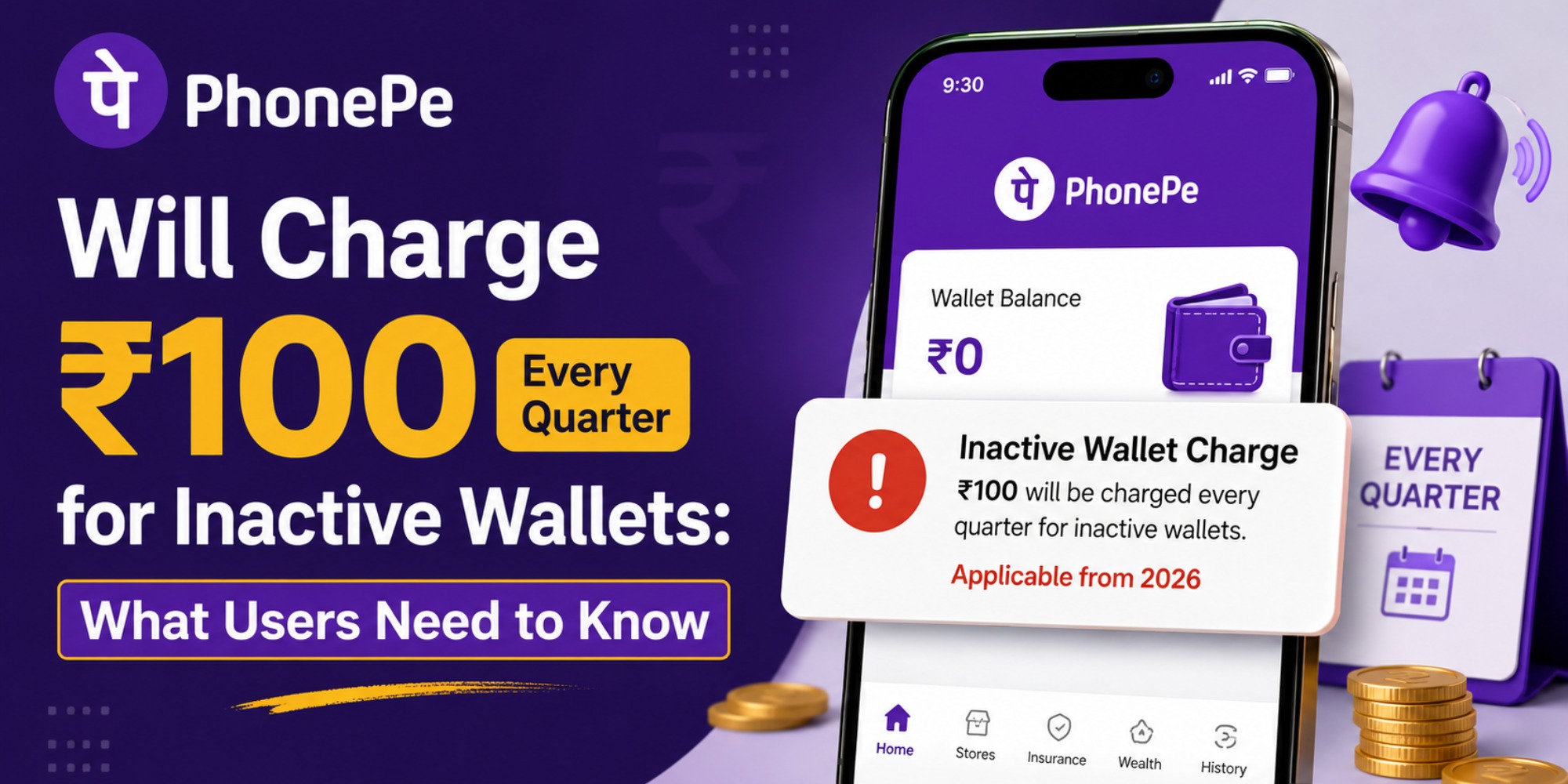
PhonePe has introduced a new inactivity maintenance fee for dormant wallets, sparking discussions across social media and the fintech industry. Under the new policy, users with inactive PhonePe wallets may be charged ₹100 every quarter if their wallet remains unused for a prolonged period. While PhonePe says the fee is intended to cover maintenance and operational costs, many users are questioning whether customers should be charged simply for not using a digital wallet.
Brief Summary: What Changed?
₹100 Quarterly Fee
Inactive wallets may be charged ₹100 every three months.
Dormant Wallets Affected
The fee applies only to wallets that remain inactive for an extended period.
Not Regular UPI Users
Most users who only use UPI linked to their bank accounts may not be affected.
User Backlash Online
Many customers have criticized the move on social media.
A New Fintech Trend?
The policy raises questions about how digital wallets will operate in the future.
Table of Contents
What Is the New Rule?
PhonePe has updated its wallet policy to introduce an inactivity maintenance fee.
If a wallet remains inactive for a specified period, PhonePe may deduct ₹100 every quarter from the wallet balance.
The company has stated that the charge applies to dormant wallets rather than active users regularly using wallet services.
This is one of the most discussed changes in India's digital payments ecosystem this year.
Why Is PhonePe Charging This Fee?
According to PhonePe, maintaining inactive wallets still requires operational resources.
The company says the fee helps cover:
Platform maintenance
Security updates
System improvements
Compliance requirements
Infrastructure costs
PhonePe argues that dormant accounts continue to consume resources even when users are not actively using them.
The debate is simple: Should companies charge users for inactive accounts, or should maintenance be treated as a business cost?
Who Will Be Affected?
The important distinction is between a PhonePe Wallet and regular UPI transactions.
Many people use PhonePe only for UPI payments linked directly to their bank accounts.
Those users may not be affected by the inactivity fee.
The fee primarily targets users who maintain money inside a PhonePe Wallet but do not use it for an extended period.
As a result, many users may not even realize they have an active wallet balance until they receive a notification.
Why Users Are Upset
The announcement has triggered criticism across social media platforms.
Many users argue that:
They were unaware they had an active wallet
They already paid fees when loading funds
Unused money should not attract penalties
The policy feels unfair to occasional users
Others believe that if banks can charge dormant account fees under certain conditions, digital wallets may eventually move in the same direction.
The controversy highlights growing customer expectations around transparency in fintech services.
How to Avoid the Fee
Users can generally avoid inactivity charges by:
Using the wallet periodically
Spending wallet balances
Transferring eligible balances where permitted
Closing unused wallets
Checking wallet status regularly can help users avoid unexpected deductions.
What This Means for Digital Wallets
The move could signal a broader shift in India's fintech industry.
As digital payment companies face increasing operational and compliance costs, they may look for new revenue sources.
Historically, many digital payment services relied on customer growth and investor funding.
However, the focus is increasingly shifting toward profitability.
Policies like inactivity fees could become more common as fintech companies search for sustainable business models.
Should Users Be Concerned?
For active users, the impact is likely to be minimal.
For users who keep money parked in wallets and rarely use them, the new rule serves as a reminder to review their digital payment accounts.
The bigger question is whether customers will accept such charges or migrate to alternative payment methods.
Key Takeaways
PhonePe has introduced a ₹100 quarterly inactivity fee for dormant wallets.
The charge applies to inactive wallet balances rather than normal UPI transactions.
The policy has generated significant debate among users and fintech observers.
It may also signal a broader shift toward monetization within India's digital payments industry.
The Bottom Line
India's digital payment revolution has largely been built around convenience and low costs.
PhonePe's new inactivity fee introduces a different conversation: should digital wallets remain free forever?
Whether users support or oppose the move, one thing is clear.
The era of completely free fintech services may be slowly coming to an end.
Frequently Asked Questions
What is the PhonePe inactive wallet fee?
PhonePe may charge ₹100 every quarter on eligible dormant wallets that remain inactive for an extended period.
Does this fee affect normal UPI transactions?
No. The fee is related to PhonePe Wallets and not standard UPI payments linked directly to bank accounts.
How can users avoid the inactivity fee?
Users can periodically use their wallet, spend the balance, or close unused wallets if they no longer need them.
Why has PhonePe introduced this charge?
The company states that inactive wallets still require maintenance, security, compliance, and infrastructure support.
Will other fintech companies introduce similar charges?
It is too early to know, but the move could influence how other digital wallet providers approach dormant accounts in the future.