

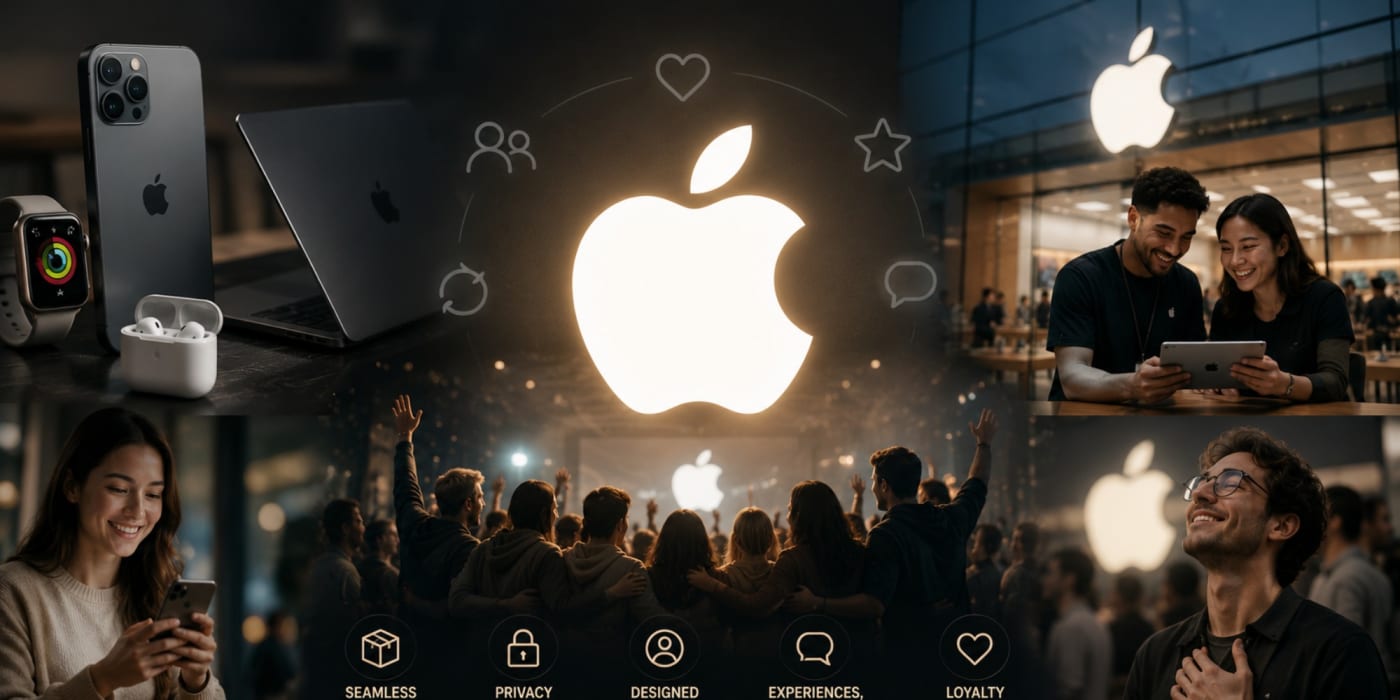
Most companies fight for customers. Apple created something even more powerful: fans. Around the world, millions of people eagerly wait for new Apple product launches, stand in long queues, and upgrade devices even when their current ones work perfectly. This level of loyalty is rare in business and offers valuable lessons for brands of every size.
Brief Summary: Apple's Brand Success
Built a Premium Brand
Apple positioned itself as a premium technology company.
Focused on Simplicity
Its products became known for being easy to use.
Created an Ecosystem
Devices work seamlessly together.
Strong Emotional Branding
Apple sells identity and lifestyle, not just technology.
Customer Loyalty
Millions of customers repeatedly buy Apple products.
Table of Contents
Why Apple Is Different
Most technology companies compete on features and specifications.
Apple competes on experience.
Instead of focusing only on technical details, Apple focuses on how products make users feel.
This approach helped the company build one of the most valuable brands in the world.
Selling Identity, Not Products
Apple understands an important marketing principle.
People do not always buy products for functional reasons.
They buy products that reflect who they are or who they want to become.
Apple positioned itself as a brand for creative, innovative, and forward-thinking people.
Customers were not just buying a phone or laptop.
They were buying into a lifestyle.
The strongest brands sell identity. The weakest brands sell features.
The Power of the Apple Ecosystem
One of Apple's biggest advantages is its ecosystem.
Products work together seamlessly:
iPhone
MacBook
Apple Watch
iPad
AirPods
The more Apple products customers own, the more convenient the experience becomes.
This increases customer retention.
How Apple Builds Loyalty
1. Consistent Design
Apple products share a familiar design language.
2. Premium Experience
From packaging to customer support, every touchpoint feels premium.
3. Simplicity
Apple removes complexity wherever possible.
4. Innovation
The company continuously introduces new ideas and improvements.
5. Emotional Connection
Customers develop a strong emotional attachment to the brand.
Business Lessons From Apple
1. Build a Brand, Not Just a Product
Products can be copied. Brands are harder to replicate.
2. Focus on Customer Experience
Experience influences loyalty more than features alone.
3. Create Consistency
Consistency builds trust over time.
4. Sell Outcomes
Customers care about results, not technical specifications.
5. Build an Ecosystem
The more value customers receive, the more likely they are to stay.
Why Apple's Strategy Still Works in 2026
Despite increasing competition, Apple continues to maintain one of the most loyal customer bases in the world.
Its focus on branding, experience, and customer relationships remains a powerful competitive advantage.
Key Takeaways
Apple built loyalty by focusing on experience, simplicity, and emotional branding.
The company created an ecosystem that increases convenience and retention.
Customers often feel connected to the brand beyond the products themselves.
Businesses can learn that long-term success comes from building relationships, not just making sales.
The Bottom Line
Apple's greatest achievement is not selling millions of devices.
It is turning customers into loyal fans.
That loyalty continues to generate growth, profitability, and one of the strongest brands in business history.
Frequently Asked Questions
Why is Apple's customer loyalty so strong?
Apple combines branding, simplicity, customer experience, and ecosystem benefits.
What is Apple's biggest competitive advantage?
Its ability to create strong emotional connections with customers.
What is the Apple ecosystem?
It is the seamless integration of Apple devices and services.
What is the biggest lesson from Apple?
Build a brand that customers want to be part of, not just a product they want to buy.