

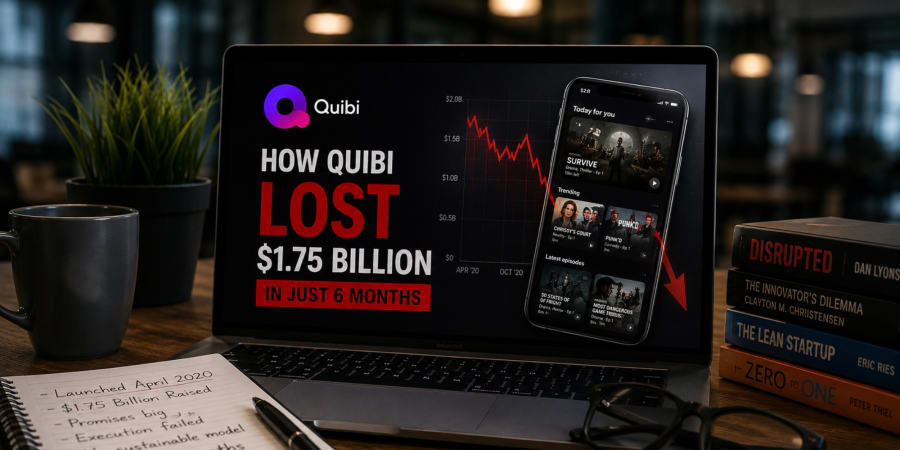
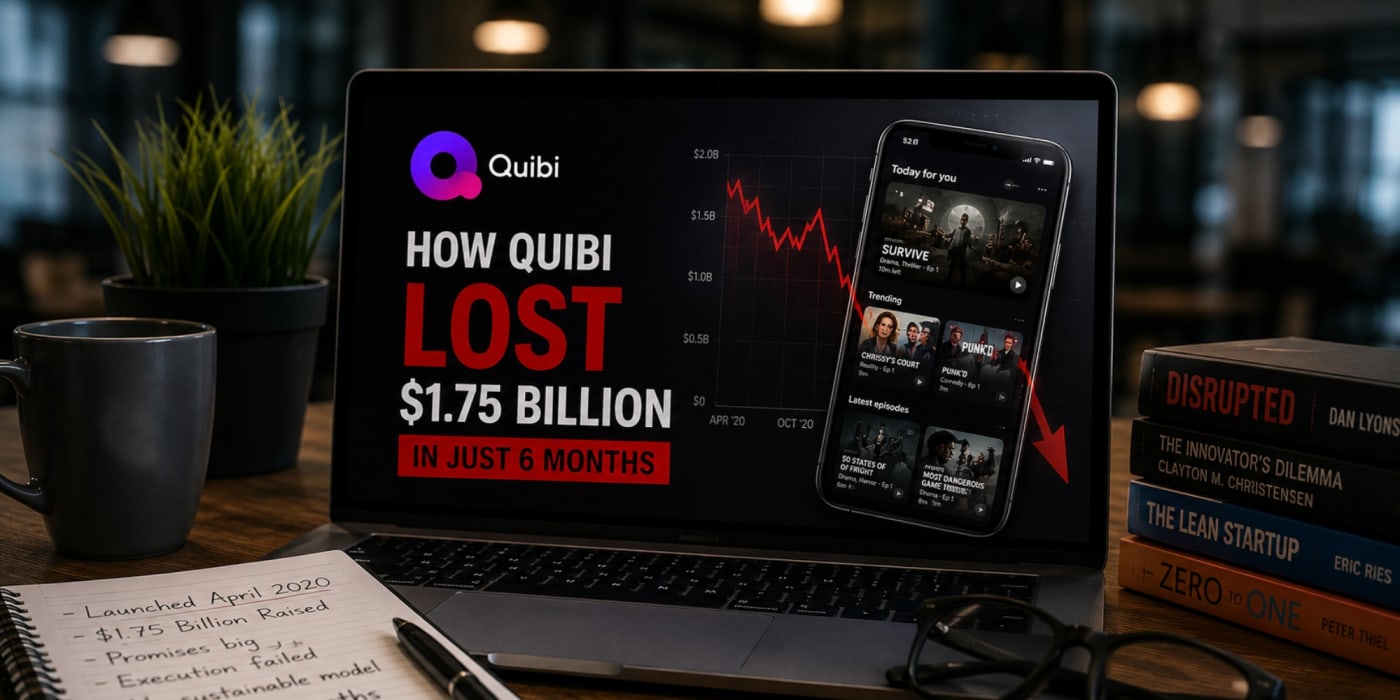
Most startups fail because they run out of money. Quibi failed despite having almost unlimited funding. Backed by Hollywood executives, major investors, and some of the world's biggest brands, Quibi looked like the next big thing in entertainment. Instead, it became one of the fastest startup collapses in business history.
Brief Summary: The Rise and Fall of Quibi
$1.75 Billion Raised
Quibi secured massive funding before launch.
Hollywood Leadership
The company was founded by former Disney chairman Jeffrey Katzenberg and CEO Meg Whitman.
Huge Marketing Campaigns
Millions were spent on branding and customer acquisition.
Poor User Adoption
Consumers did not see enough value in the product.
Shutdown in 6 Months
The platform officially shut down shortly after launch.
Table of Contents
- What Was Quibi?
- Why Investors Loved It
- The Biggest Mistakes Quibi Made
- What Startups Can Learn
- The Future of Startup Success
- Key Takeaways
What Was Quibi?
Quibi was a short-form video streaming platform designed specifically for mobile phones.
The company believed people wanted premium Hollywood content in small episodes that could be watched during short breaks.
The name Quibi came from "Quick Bites."
The vision seemed perfect for a mobile-first world.
Why Investors Loved Quibi
Everything looked impressive.
World-class founders.
Huge funding.
Celebrity partnerships.
Massive media attention.
Professional branding.
Before launch, many believed Quibi would become the future of entertainment.
The startup raised approximately $1.75 billion from investors.
Money can accelerate growth. It cannot create product-market fit.
The Biggest Mistake: Solving a Problem Nobody Had
Quibi assumed customers wanted premium short-form videos.
The problem was that customers were already getting free short-form content from:
YouTube
Instagram
TikTok
Snapchat
Consumers did not feel a strong reason to pay for another platform.
The startup focused heavily on content quality but underestimated customer behavior.
Mistake #2: Ignoring Market Validation
Many startups build products first and validate later.
Quibi invested billions before fully proving demand.
By the time customer feedback arrived, it was too late.
Mistake #3: Confusing Hype With Demand
Media coverage was enormous.
Investors were excited.
Industry experts were talking about it.
But excitement from investors does not always mean customers want the product.
Many founders make this mistake.
Mistake #4: Launching at the Wrong Time
Quibi launched during the COVID-19 pandemic.
The platform was designed for people commuting and traveling.
Suddenly millions of people were staying at home.
Consumer behavior changed overnight.
The core use case disappeared.
Mistake #5: Underestimating Competitors
Quibi was competing against companies with billions of users.
Platforms like TikTok and YouTube were already dominating attention.
Consumers had limited time and many alternatives.
The Lesson for Modern Startups
The biggest lesson from Quibi is simple.
Start with customer demand.
Many founders focus on:
Funding
Branding
Technology
Features
But customers only care about one thing:
Does this solve a real problem?
What Business Owners Can Learn
1. Validate Before Scaling
Test demand before investing heavily.
2. Listen to Customers
Customer behavior matters more than assumptions.
3. Build Distribution Early
Great products still need visibility.
4. Focus on Product-Market Fit
Without product-market fit, growth becomes expensive.
5. Stay Flexible
Markets change quickly.
Businesses must adapt.
Why This Story Matters in 2026
Today, many AI startups are raising millions of dollars.
Many businesses are rushing to launch new products.
Quibi reminds founders that funding alone does not guarantee success.
The fundamentals still matter.
Key Takeaways
Quibi raised $1.75 billion and became one of the most anticipated startups in the world.
Despite strong branding and funding, it failed within six months.
The startup struggled with product-market fit, timing, and customer demand.
The biggest lesson is that solving real problems matters more than raising money.
The Bottom Line
Quibi is one of the clearest examples of why startups fail.
It had funding, talent, media attention, and branding.
What it lacked was strong customer demand.
For founders, marketers, and business owners, the lesson is timeless:
Build what customers need, not what investors want to hear.
Frequently Asked Questions
What was Quibi?
Quibi was a mobile-first short-form video streaming platform.
How much money did Quibi raise?
Approximately $1.75 billion.
Why did Quibi fail?
Poor product-market fit, strong competition, timing issues, and weak customer adoption.
What is the biggest lesson from Quibi?
Validate customer demand before investing heavily in growth.