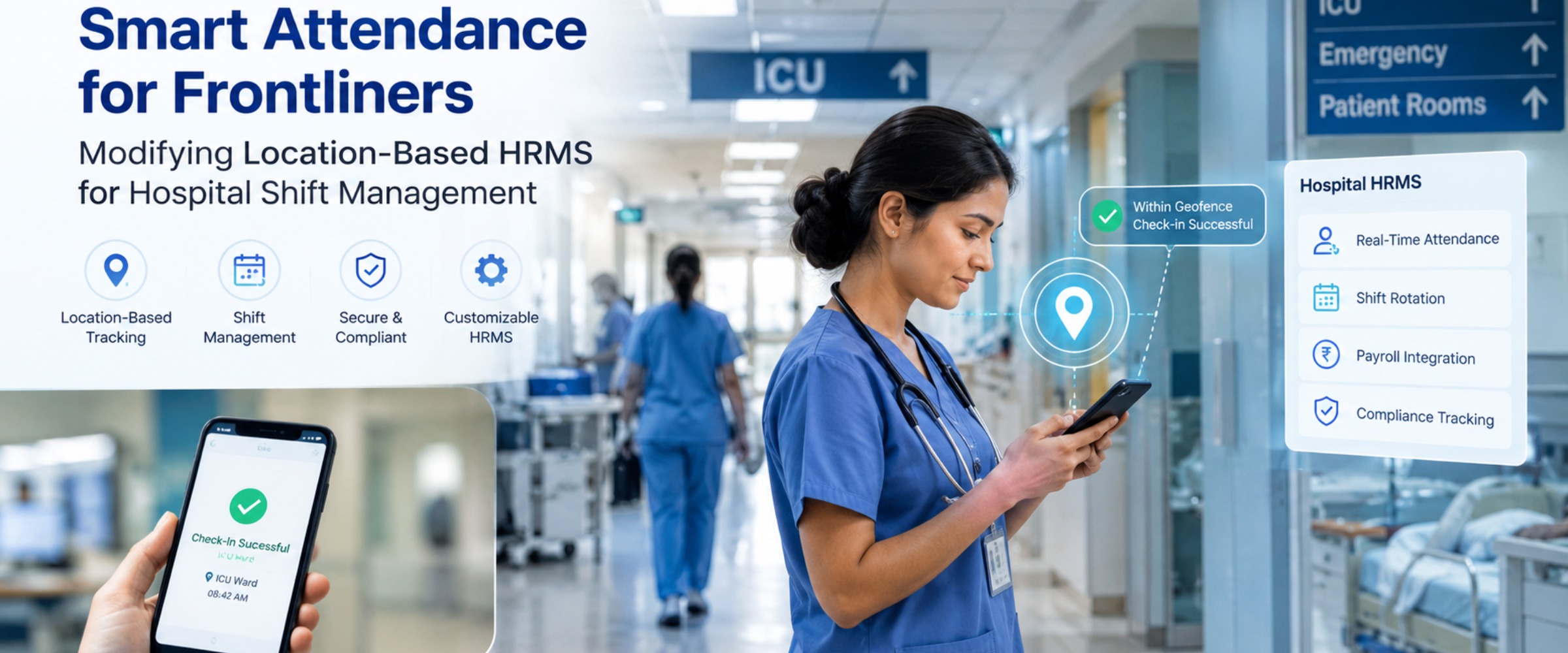
Managing workforce operations in high-stakes environments like healthcare requires absolute precision. In fast-paced healthcare corridors across Singapore, Manila, Jakarta, and Bangkok, legacy attendance methods fail to capture the reality of medical scheduling. Manual sign-ins and static biometric stations create bottleneck delays at shift changes, draining precious time from medical professionals.
The solution lies in adapting agile corporate infrastructure for frontline healthcare reality by implementing smart attendance for frontliners.
By re-engineering standard corporate attendance engines into specialized healthcare tracking systems, healthcare institutions can eliminate manual paperwork. Here is an architectural blueprint showing how modifying a location-based HRMS and IP-based attendance tracking engine solves the chaos of complex hospital shift management.
The Structural Challenge: Why Standard Corporate HR Platforms Fail in Healthcare
Standard corporate HR systems operate on a predictable grid: employees arrive at a single office floor, log in during a fixed morning window, and leave at a set evening hour. Hospitals break every rule of this standard setup.
Medical staff navigate irregular 12-hour rotations, alternating overnight schedules, and emergency multi-department transfers. If a nurse rushes directly to an emergency ward on a different floor, forcing them to walk to a central biometric scanner creates compliance gaps. Legacy tools lack the operational elasticity required to track dynamic medical movements, leading to payroll disputes and operational fatigue.
The Technical Shift: From Corporate Desks to Medical Wards
Transforming standard corporate software into a resilient frontline engine requires shifting from static tracking to flexible, contextual validation hubs.
[Frontliner Arrives at Ward]
            │
            ▼ (Opens Mobile App / Automated Background Check)
[Geofenced Radius + Ward Wi-Fi IP] ───► [Instant Match with Active Shift Schedule]
            │
            ▼ (Validated in <1 Second)
[Secure Attendance Logged] ───► [Real-Time Shift Handover Updates Notification]
This automated flow pairs location telemetry with shift metadata, ensuring tracking happens seamlessly without manual intervention from busy medical professionals.
Core Architecture Modifications for Healthcare Compliance
Converting a standard enterprise software engine into an automated hospital shift management platform requires three critical engineering updates:
- Dynamic Micro-Geofencing & Ward-Level Isolation: Standard geofencing tracks macro boundaries like an entire office building block. A hospital setup requires micro-geofencing. By pairing location coordinates with specific indoor router subnets, the system verifies if a physician is on the third-floor ICU or the ground-floor triage unit.
- Integrated Multi-Tier Shift Rotation Logic: Healthcare operations rely on rolling schedules, on-call standby status, and emergency backfills. The scheduling engine must communicate directly with the location logger, automatically mapping a staff member's clock-in to their active, swapped, or overtime shift profile without manual HR overriding.
- Fail-Safe IP-Based Attendance Tracking: Inside shielding-heavy hospital wings, GPS data often drops out completely. Utilizing IP-based attendance tracking tied to secure hospital facility access points provides a robust fail-safe, authenticating staff attendance through encrypted internal network connections.
Strategic Impact of Smart Attendance Systems on Healthcare Operations
Deploying specialized tracking engines delivers clear operational improvements for healthcare management:
- Optimized Staffing Compliance: Real-time tracking displays immediate staffing balances across intensive care units, helping floor managers spot shortages early and reallocate personnel efficiently.
- Frictionless Payroll Processing: Automating the tracking of overtime hours, night shift differentials, and holiday rotations directly cuts down administrative processing overheads for HR teams.
- Reduced Administrative Fatigue: Minimizing manual tracking friction allows medical professionals to dedicate their focus entirely to patient care workflows.
Frequently Asked Questions (FAQ)
How does micro-geofencing work inside a hospital?
Micro-geofencing combines coordinate polygons with localized hardware signatures like network routers. This double validation verifies that staff members are located in specific treatment spaces rather than just checking into the generic building address.
Can an IP-based attendance tracking setup work during internet outages?
Yes. The system architecture processes records inside the local local area network (LAN) node, keeping an internal ledger running securely. Once wide-area data connectivity resumes, logs sync securely with the core cloud infrastructure.
Does smart attendance software support complex healthcare rotation plans?
Yes. The backend architecture contains automated shift adjustment matrix blocks. This maps late swaps, on-call assignments, and back-to-back shifts to verified tracking logs without requiring manual administrative entry.