
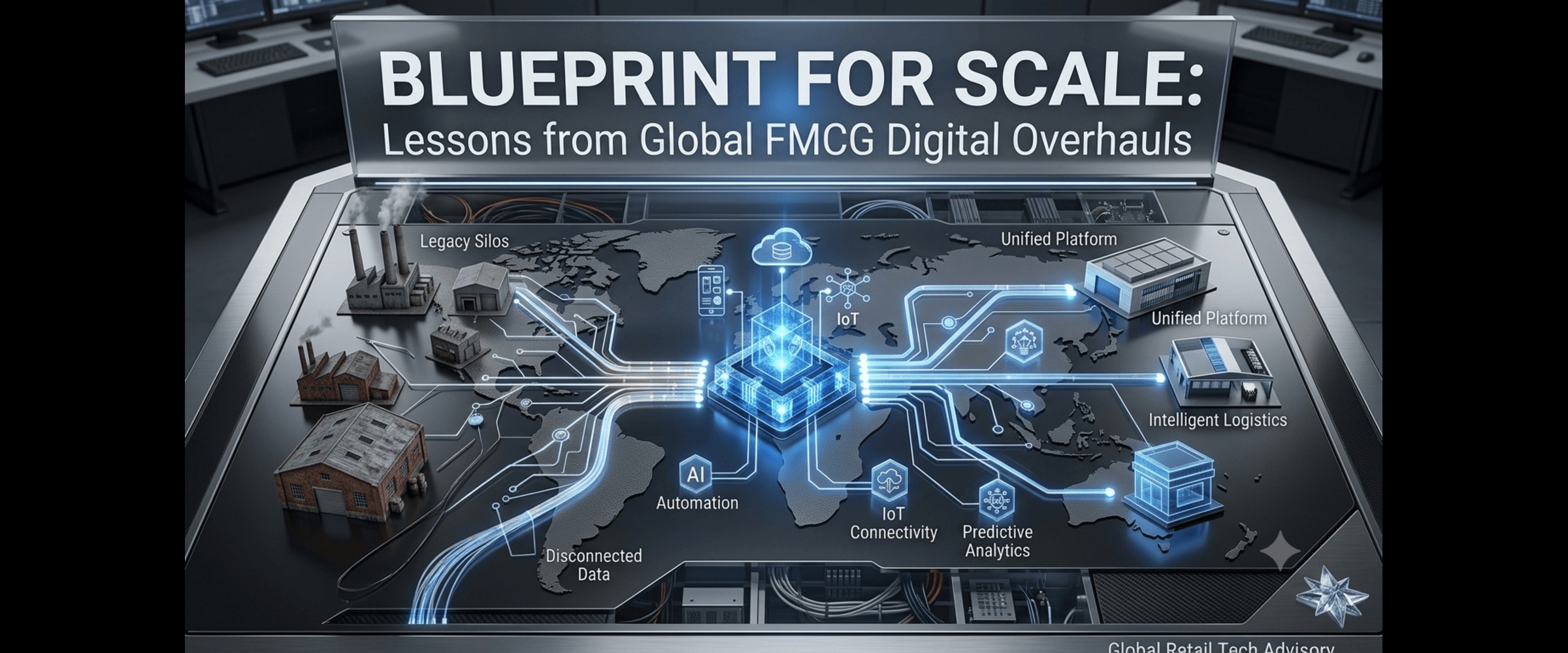
Digital transformation within the Fast-Moving Consumer Goods (FMCG) sector is notoriously complex. Enterprise leaders face deeply entrenched legacy distribution networks, siloed regional operations, and highly fragmented supply chains. However, recent regional case studies from global industry leaders reveal a highly successful, structured framework for execution that modern mobile architectures must follow to remain competitive.
As markets like Singapore and the wider South Asia-Pacific transition into highly automated ecosystems, standard standalone retail applications are no longer sufficient. True value is unlocked when the customer-facing interface is tightly coupled with robust back-end cloud platforms.
The Three-Phase Integration Playbook
Successful enterprise transformation is systematically rolled out across three core temporal phases. Attempting to deploy advanced consumer features before securing core operational layers is one of the primary reasons large-scale software rollouts fail.
-
Phase 1: Breaking the Silos (Months 0–12)
The immediate priority is establishing a unified data platform to serve as a single source of truth across operations, logistics, and finance. Mobile tools deployed during this phase focus heavily on internal stakeholders. Enterprise brands roll out customized distributor applications that eliminate paper trails, digitize inventory logging, and map real-time distributor performance metrics natively.
-
Phase 2: IoT and Edge Deployment (Months 12–18)
Once data protocols are unified, companies connect physical infrastructure directly to the digital network. This involves deploying IoT sensors and smart gateways across warehouses and transit fleets to track ambient data, location, and assets in real-time. This live status is fed instantly into logistics and route-optimisation modules accessible via delivery-partner apps.
-
Phase 3: The Intelligence Layer (Months 18–30)
Only after the structural data and hardware foundation are secure does the brand activate advanced Artificial Intelligence layers. This includes implementing dynamic pricing engines, automated computer-vision quality inspections, and direct-to-consumer (D2C) mobile applications featuring hyper-personalized recommendation algorithms and contextual predictive ordering flows.
Key Architectural Requirements for 2026 and Beyond
To successfully support this three-phase blueprint, enterprise mobile software architectures must be engineered with specific core capabilities:
- API-First Modular Frameworks: Applications must interface seamlessly with legacy Enterprise Resource Planning (ERP) databases, Warehouse Management Systems (WMS), and third-party accounting applications through highly secure microservices.
- Offline-First Capabilities: For apps serving regional supply chain nodes with inconsistent connectivity, robust client-side storage and conflict-free data replication are critical.
- Strict Cross-Border Compliance: Platforms operational in the APAC footprint must utilize architectures that support localized data residency mandates while facilitating secure, anonymized global analytics reporting.
The Strategic Takeaway
High-performing consumer applications do not succeed in a vacuum. A brand's mobile application strategy is only as powerful as the unified enterprise data infrastructure supporting it underneath. To build a software ecosystem that drives true market differentiation, organizations must first build the foundational pipelines that make scale possible.