
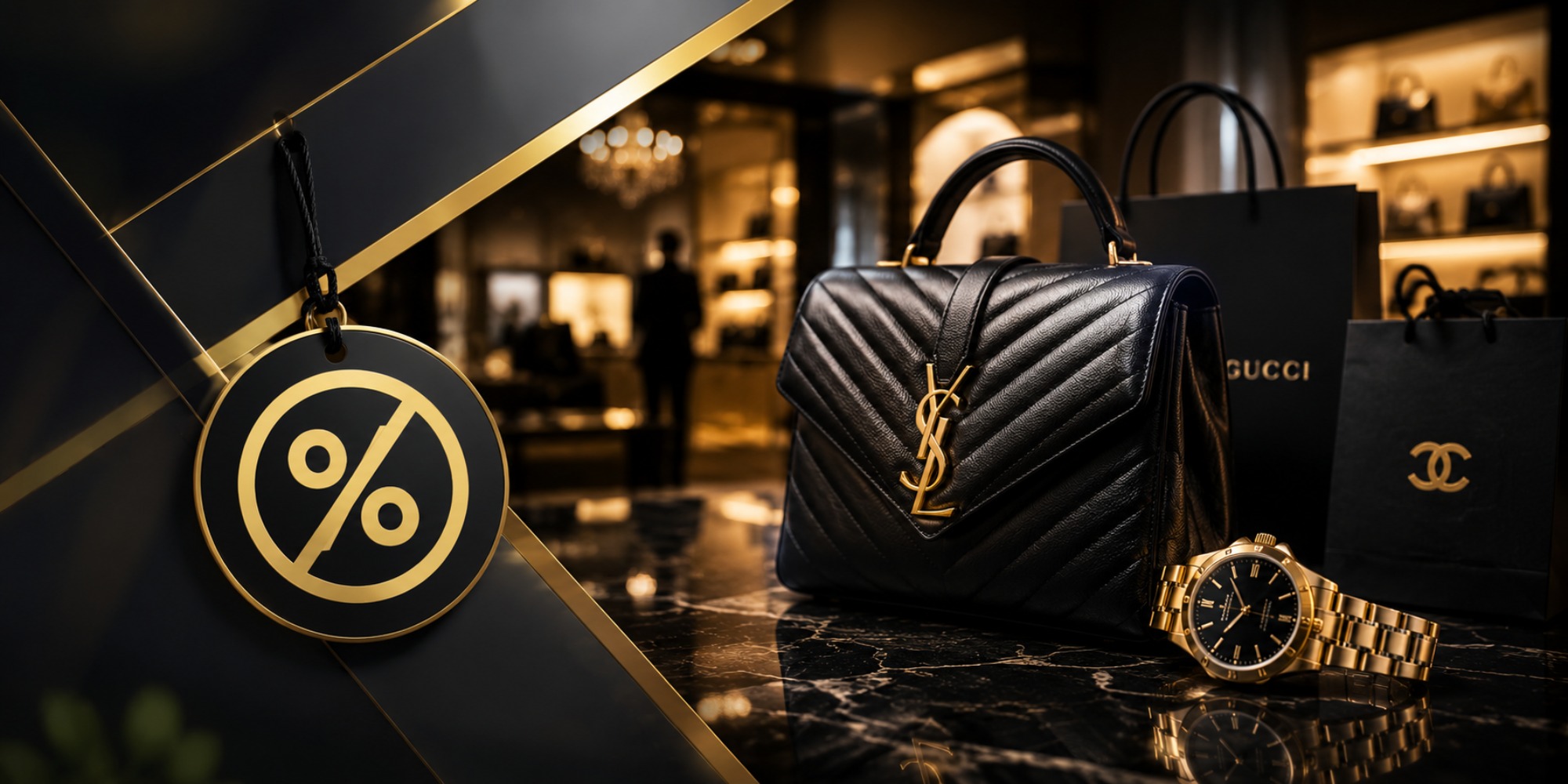
Most businesses use discounts to attract customers. Luxury brands do the exact opposite. Companies like Rolex, Hermès, Louis Vuitton, and Ferrari rarely offer discounts, yet customers willingly pay premium prices and often wait months or even years to purchase their products. This strategy may seem counterintuitive, but it is one of the most powerful examples of consumer psychology in modern business.
Brief Summary: Luxury Pricing Strategy
Scarcity Creates Demand
Limited availability increases perceived value.
Exclusivity Matters
Luxury customers often seek status and uniqueness.
Premium Pricing Builds Perception
Higher prices can increase desirability.
Discounts Can Damage Brand Value
Frequent promotions reduce exclusivity.
Luxury Brands Sell Identity
Customers buy more than just products.
Table of Contents
Why Luxury Brands Avoid Discounts
For most businesses, discounts are a sales tool.
For luxury brands, discounts can become a branding problem.
Luxury companies spend years building an image of exclusivity, craftsmanship, and prestige.
If customers know products will eventually be discounted, many will simply wait.
This weakens the perception of exclusivity that luxury brands depend upon.
Luxury is not about affordability. It is about desirability.
The Psychology of Premium Pricing
Most people assume lower prices attract more customers.
In luxury markets, the opposite can sometimes be true.
Higher prices often signal:
Higher quality
Greater exclusivity
Prestige
Status
Many customers use price as a shortcut for judging value.
As a result, premium pricing can actually increase demand among certain customer groups.
How Scarcity Increases Demand
Luxury brands intentionally limit supply.
Some products have waiting lists that stretch for months or years.
This creates scarcity.
When people believe something is difficult to obtain, its perceived value increases.
Scarcity creates urgency and desire.
Customers begin to view ownership as an achievement.
Why People Buy Luxury Products
Luxury purchases are rarely based solely on functionality.
A luxury watch and a standard watch both tell time.
A luxury handbag and a standard handbag both carry items.
The difference often lies in emotion, identity, and social perception.
Luxury brands sell:
Status
Identity
Achievement
Recognition
Lifestyle
Customers are often buying what the product represents rather than what it does.
Why Discounts Can Be Dangerous
Imagine a luxury handbag that normally sells for ₹2 lakh.
If customers regularly see it discounted by 50%, they may begin questioning its value.
The brand risks becoming less exclusive.
This is why luxury companies focus on preserving brand value rather than maximizing short-term sales.
Business Lessons From Luxury Brands
1. Perception Matters
How customers perceive a product can be just as important as the product itself.
2. Avoid Competing Only on Price
Competing on price often leads to lower margins and weaker brand positioning.
3. Build Exclusivity
People value things that are difficult to obtain.
4. Focus on Brand Value
Strong brands can command higher prices without relying on discounts.
5. Sell an Experience
Customers remember experiences and emotions more than features.
Key Takeaways
Luxury brands avoid discounts because they protect exclusivity and brand value.
Premium pricing often increases perceived value and desirability.
Scarcity creates demand and strengthens customer interest.
Luxury brands succeed because they sell identity, status, and experience rather than just products.
The Bottom Line
Most businesses use discounts to drive sales.
Luxury brands use exclusivity to drive demand.
Their success demonstrates an important business lesson:
The strongest brands do not compete on price. They compete on perception.
Frequently Asked Questions
Why don't luxury brands offer discounts?
Luxury brands avoid discounts to maintain exclusivity, protect brand value, and preserve premium positioning.
Why do people pay high prices for luxury products?
Customers often buy luxury products for status, identity, craftsmanship, and emotional value.
What is the scarcity principle?
Scarcity is a psychological principle where limited availability increases perceived value and demand.
Can small businesses learn from luxury brands?
Yes. Businesses can focus on brand value, customer experience
What is the biggest lesson from luxury brands?
Perception, exclusivity, and brand positioning can be more powerful than competing on price.