
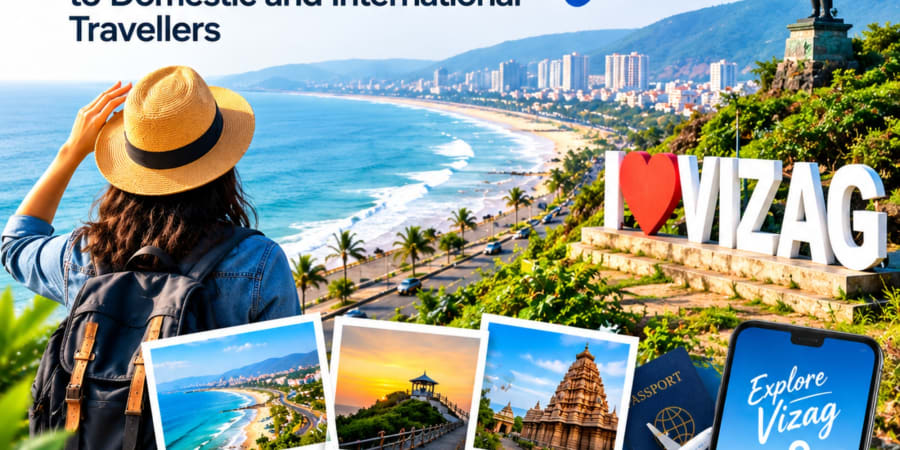
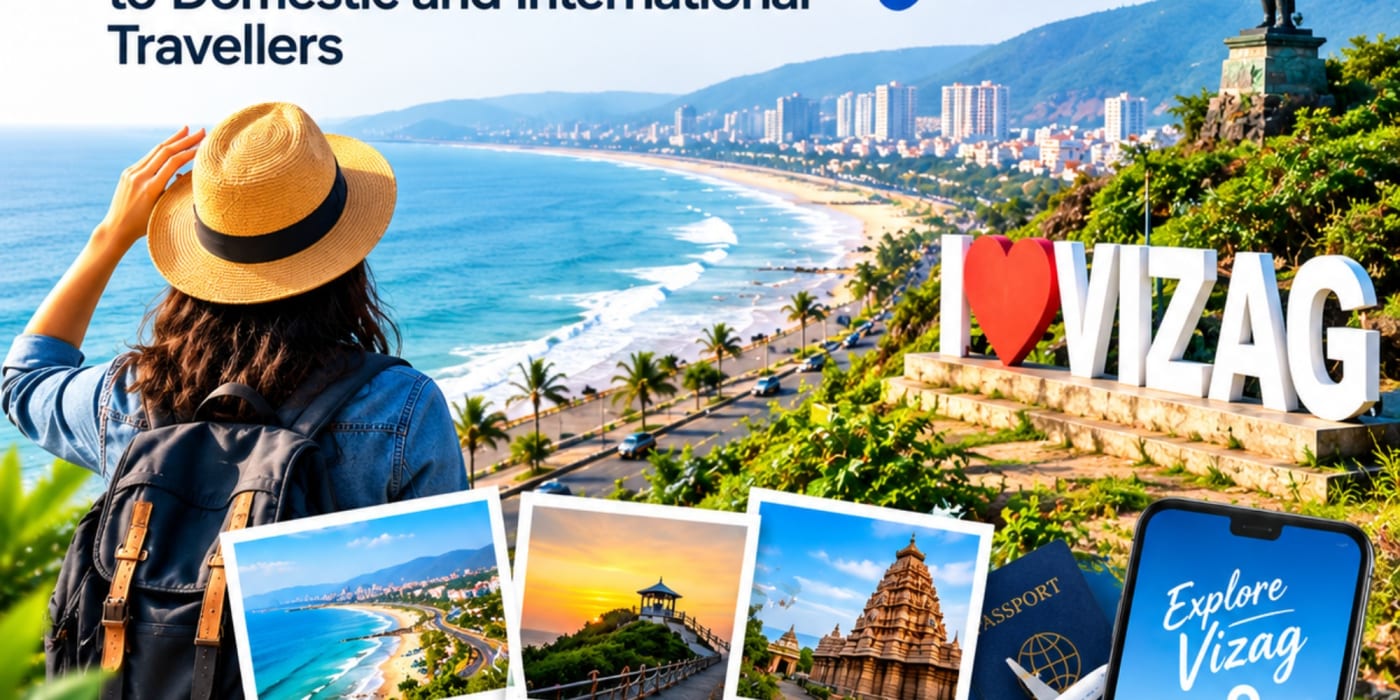
Visakhapatnam, popularly known as Vizag, has the potential to attract travellers looking for coastal holidays, cultural experiences, heritage tourism, nature trips, and local food experiences. From the beaches of Rushikonda and Yarada to Kailasagiri, Buddhist heritage sites, and the scenic Araku Valley region, the destination offers a variety of experiences for different types of travellers.
However, attracting tourists today requires more than attractive photographs, printed brochures, or traditional advertising. Travellers increasingly research destinations online, compare accommodation options, check reviews, plan itineraries, and make bookings through digital channels. For tourism businesses in Vizag, this creates an opportunity to combine tourism marketing with mobile app development, website development, online booking systems, and integrated digital platforms.
By investing in the right technology, hotels, resorts, travel agencies, tour operators, local guides, and activity providers can make it easier for domestic and international visitors to discover Vizag, plan their trips, and book experiences.
1. Understanding Vizag's Tourism Marketing Opportunity
The Indian Journal of Marketing published a study titled Marketing of Tourism Services – A Case Study on AP Tourism (APTDC Ltd) Visakhapatnam in February 2007. The study examined the tourism development and marketing approach of Andhra Pradesh Tourism Development Corporation in Visakhapatnam.
While the study provides historical context, tourism businesses today can extend destination marketing through mobile-first websites, online booking tools, digital advertising, customer relationship management systems, and dedicated travel applications.
Visakhapatnam's official tourism information highlights beaches, scenic locations, heritage attractions, and nearby destinations such as Araku Valley and Borra Caves. This diversity allows businesses to create digital travel experiences for families, couples, adventure seekers, cultural travellers, corporate visitors, and international tourists.
2. Why Tourism Businesses Need a Strong Digital Presence
A traveller planning a trip may search for hotels near RK Beach, weekend packages in Vizag, guided tours, transport to Araku Valley, or local sightseeing experiences. If a tourism business does not have clear online information, potential customers may choose a competitor with easier booking options.
A strong digital presence helps tourism businesses:
- Reach travellers searching for destinations and experiences online.
- Display packages, accommodation, pricing, inclusions, and availability.
- Receive enquiries and bookings through websites and mobile devices.
- Build trust
- Communicate with customers before, during, and after their trips.
- Measure enquiries, booking conversions, and marketing performance.
3. Build a Tourism Website That Converts Visitors into Customers
A professional, mobile-responsive website should be the foundation of a tourism business's digital strategy. Social media can introduce a destination to travellers, but the website should help them understand the offering and take the next step.
For a hotel, resort, travel agency, or tour operator in Vizag, a well-designed website can include:
- Destination pages: Dedicated pages for Vizag beaches, sightseeing, cultural attractions, nature trips, and nearby destinations.
- Tour package listings: Detailed itineraries, trip duration, inclusions, exclusions, prices, and booking conditions.
- Accommodation information: Room categories, amenities, photographs, location, and availability.
- Online enquiry forms: Simple forms to collect travel dates, group size, preferred experiences, and contact details.
- Booking functionality: Reservation requests, availability checks, payment integration, and confirmation workflows where required.
- Contact integration: Click-to-call, WhatsApp enquiries, email, and location maps.
- Customer reviews: Genuine feedback that helps prospective travellers make informed decisions.
The website should load quickly, work well on mobile devices, use clear navigation, and make important information easy to find. Search engine optimisation can help it appear for relevant queries such as “Vizag tour packages,” “beach resorts in Visakhapatnam,” and “Araku Valley travel packages.”
4. How Mobile App Development Can Improve Tourism Experiences
A mobile application can provide a more connected experience for tourism businesses that manage frequent bookings, repeat customers, multiple tour packages, or large numbers of travellers. Not every small tourism operator needs a dedicated app immediately; a mobile-friendly website may be a more practical starting point. As customer demand and operational needs grow, a custom application can add further value.
Useful features for a tourism mobile app
- Tour discovery: Let users browse attractions, sightseeing packages, accommodation, and curated experiences.
- Personalised itineraries: Allow travellers to save destinations, select activities, and organise trip plans.
- Booking management: Enable customers to request, confirm, view, or modify eligible reservations.
- Secure payments: Integrate suitable payment gateways with clear pricing and transaction status.
- Digital tickets and confirmations: Provide booking references, receipts, and itinerary details in one place.
- Location and navigation: Link to map services and display meeting points, pickup locations, and directions.
- Multilingual content: Offer relevant language options for audiences from different regions and countries.
- Notifications: Send consent-based updates about booking confirmations, pickup schedules, or itinerary changes.
- Customer support: Connect users with support teams through in-app messaging, phone, or WhatsApp.
For example, a travel operator could offer a three-day Vizag itinerary through a mobile app. A customer could browse the itinerary, request a customised package, submit traveller details, pay through an integrated gateway when available, and access the booking confirmation from a single interface.
The objective is not to build an app simply because mobile apps are popular. It is to solve real customer problems and reduce manual work for the business.
5. Develop an Integrated Tourism Booking Platform
Tourism businesses often manage bookings through phone calls, messaging applications, spreadsheets, and separate third-party services. As the business grows, this approach can lead to missed enquiries, inconsistent pricing, duplicate reservations, and delays in customer communication.
A custom tourism booking platform can connect the customer-facing website with an administrative dashboard and the business's operational processes.
Key platform modules
- Package management: Create and update tours, schedules, inclusions, prices, and seasonal offers.
- Availability management: Track room inventory, seats, guide schedules, vehicles, or activity capacity as appropriate.
- Booking dashboard: View new enquiries, pending requests, confirmed reservations, cancellations, and completed trips.
- Customer database: Maintain appropriate customer records and travel preferences with suitable access controls.
- Payment tracking: Record payment status, refunds, invoices, and transaction references.
- Supplier coordination: Organise information shared with hotels, transport providers, guides, and activity partners.
- Automated communication: Send booking acknowledgements, reminders, and post-trip feedback requests.
- Performance reports: Analyse bookings, popular packages, enquiry sources, and conversion rates.
Such a platform can be particularly useful for travel agencies offering combined packages that include accommodation, local sightseeing, transport, and trips to destinations around the region.
6. Create Separate Digital Strategies for Domestic and International Travellers
Domestic and international travellers may have different expectations, budgets, planning habits, language preferences, and information needs. Tourism businesses should adapt their digital experiences to the audiences they want to reach.
Marketing to domestic travellers
- Create weekend, family holiday, honeymoon, school holiday, and group travel packages.
- Publish clear prices in Indian rupees and explain what each package includes.
- Provide transport information, trip durations, pickup options, and cancellation policies.
- Use regional-language content where appropriate, including Telugu and other languages relevant to target markets.
- Promote packages through search engines, Instagram, YouTube, and opt-in WhatsApp communications.
- Offer convenient enquiry and payment journeys that work well on mobile devices.
Marketing to international travellers
- Provide clear English-language information and additional language options where demand justifies them.
- Explain local customs, weather considerations, transport arrangements, and practical travel information.
- Display transparent package prices, payment conditions, inclusions, and cancellation terms.
- Provide international contact options and clear response expectations.
- Explain accepted payment methods and any applicable currency or transaction fees.
- Publish accessible, well-organised information about cultural attractions, heritage locations, local cuisine, and guided experiences.
International marketing should also account for different time zones, accessibility needs, customer support expectations, and the additional planning time that some overseas visitors require.
7. Use SEO and Destination Content to Attract Travellers
Search engine optimisation helps tourism businesses connect with travellers who are already looking for places to visit, accommodation, or organised trips. Instead of relying only on broad terms such as “tourism in Andhra Pradesh,” businesses can create useful pages around specific destinations and customer needs.
Content opportunities for Vizag tourism businesses
- Best places to visit in Vizag for a weekend.
- How to plan a family holiday in Visakhapatnam.
- Vizag beach sightseeing and accommodation guide.
- How to organise a trip from Vizag to Araku Valley.
- Local food and cultural experiences in Visakhapatnam.
- Vizag travel itineraries for domestic and overseas visitors.
- Frequently asked questions about bookings, transport, and tour packages.
Each article should link naturally to relevant packages, destination pages, enquiry forms, or booking options. This connects informational searches with the business's services.
Tourism websites should also use descriptive page titles, structured headings, useful image descriptions, fast-loading pages, and consistent business information. Local search profiles and genuine customer reviews can help nearby and destination-focused searches discover a business.
8. Promote Vizag Through Social Media and Video Marketing
Tourism is highly visual. Beaches, hill landscapes, local food, heritage sites, accommodation, and guided experiences can be presented through short videos, photo stories, travel guides, and customer testimonials.
A study on social media marketing in Andhra Pradesh reported that respondents commonly used Instagram and YouTube for travel content and expressed interest in short videos and travel vlogs. Its sample was limited, so the findings should be treated as indicative rather than representative of all tourists.
Tourism businesses can translate these insights into a consistent content plan:
- Publish short videos showcasing genuine travel experiences and package highlights.
- Create itinerary videos that explain what visitors can do in one, two, or three days.
- Show accommodation, amenities, meeting points, and transport arrangements accurately.
- Collaborate with relevant travel creators and local guides, with clear deliverables and disclosure of paid partnerships.
- Repurpose approved video content across the website, social media pages, and booking campaigns.
- Include clear calls to action that direct interested viewers to package details or booking pages.
Marketing content should accurately represent the location, facilities, prices, and services being promoted. Trust is essential when customers are booking a trip from another city or country.
9. Connect Digital Marketing with CRM and Automation
Generating enquiries is only the first step. Tourism businesses also need a reliable process to respond to prospective customers, follow up on requests, and convert suitable enquiries into bookings.
A customer relationship management (CRM) system can help tourism businesses organise leads from websites, paid advertisements, social media, phone calls, and messaging platforms.
Useful CRM capabilities include:
- Recording the source of each enquiry.
- Assigning leads to the appropriate sales or booking team member.
- Tracking enquiry status and scheduled follow-ups.
- Preparing package quotations and maintaining communication history.
- Sending permission-based reminders and relevant offers.
- Collecting post-trip feedback and managing customer service requests.
For instance, if a family submits an enquiry for a Vizag holiday package, the system can record the travel dates, group size, preferred activities, and enquiry source. The team can then prepare a relevant quotation and follow up without relying on scattered messages or spreadsheets.
10. Build Trust with Reliable Information and Better User Experience
Travellers may hesitate to book when a website has outdated prices, unclear cancellation conditions, incomplete contact details, or limited information about the service provider. Digital platforms should reduce this uncertainty.
Tourism businesses should prioritise:
- Accurate prices and clearly stated inclusions and exclusions.
- Verified contact information and business details.
- Transparent refund, cancellation, and rescheduling policies.
- Secure handling of customer information and payment transactions.
- Authentic photographs and genuine customer reviews.
- Accessible interfaces and straightforward booking steps.
- Regular updates to seasonal packages, opening information, and service availability.
Businesses should avoid promising real-time availability unless their systems are connected to reliable inventory data. Similarly, maps, transport information, attraction timings, and safety notices should be checked and updated as needed.
11. Measure Digital Performance with Meaningful Metrics
Tourism businesses should evaluate whether their digital investments contribute to enquiries, bookings, customer satisfaction, and operational efficiency. Website traffic alone does not show whether a campaign is generating business.
Useful performance indicators include:
- Website engagement: Visits to destination pages, package pages, and booking sections.
- Enquiry conversion rate: The percentage of relevant website visitors who submit enquiries.
- Booking conversion rate: The percentage of qualified enquiries that become confirmed bookings.
- Cost per enquiry: Marketing expenditure divided by the number of enquiries generated.
- Cost per booking: Campaign expenditure divided by attributable confirmed bookings.
- Revenue by channel: Revenue associated with search, paid advertising, referrals, or social campaigns.
- Customer satisfaction: Reviews, support requests, complaints, and feedback scores.
- Repeat business: Returning customers and referrals from previous visitors.
Tracking should respect applicable privacy requirements and customer consent. Businesses can use the resulting insights to improve their websites, refine advertising audiences, adjust package presentation, and prioritise the channels that deliver valuable customers.
12. A Practical Digital Roadmap for Tourism Businesses in Vizag
Tourism businesses do not need to develop every digital feature at once. A phased roadmap helps them invest in the capabilities that solve their most immediate problems.
Phase 1: Establish a strong online foundation
- Build or improve a mobile-responsive website.
- Create clear service, package, destination, and contact pages.
- Set up relevant local search profiles and analytics.
- Introduce simple online enquiry forms and messaging links.
Phase 2: Improve lead generation and booking management
- Implement structured enquiry and booking workflows.
- Connect website leads to a CRM or central dashboard.
- Integrate suitable payment services where required.
- Develop destination-specific SEO pages and a consistent content plan.
Phase 3: Expand into custom digital platforms
- Develop a mobile application if customer demand and business requirements justify it.
- Connect bookings, inventory, customer records, and notifications.
- Introduce partner dashboards for suppliers or travel agents where useful.
- Use performance data to improve customer journeys and marketing campaigns.
This phased approach helps businesses avoid unnecessary development costs while creating a foundation that can grow with demand.
13. How Nextcode Company Can Help Tourism Businesses
Tourism businesses need digital solutions that connect marketing with real business operations. A website should help travellers discover services, a booking platform should simplify reservations, and a CRM should help the team manage enquiries and customer relationships.
Nextcode Company develops websites, mobile applications, booking systems, and custom digital platforms designed around business requirements. For tourism operators, hotels, resorts, travel agencies, and experience providers, potential solutions include:
- Tourism and hospitality website development.
- Android and iOS mobile application development.
- Custom tour booking and reservation platforms.
- Online payment and third-party service integrations.
- CRM and enquiry management systems.
- Admin dashboards, reporting tools, and workflow automation.
- Ongoing maintenance, performance improvements, and feature development.
The right solution depends on the business model, target audience, booking volume, existing systems, and budget. A discovery and planning stage can identify the most useful features before development begins.
Ready to Grow Your Tourism Business with Digital Technology?
Make it easier for travellers to discover your services, explore your packages, and enquire or book online. Nextcode Company can help you plan and develop a website, mobile app, or custom digital platform aligned with your business goals.
Discuss Your Digital ProjectConclusion
Vizag's tourism sector can benefit from combining destination marketing with practical digital product development. Websites, mobile applications, online booking platforms, CRM systems, and data-driven marketing can help tourism businesses reach relevant audiences and deliver a more convenient customer experience.
Domestic travellers may respond to accessible holiday packages, transparent pricing, and simple mobile booking journeys. International visitors may need clear travel information, multilingual content, reliable support, and confidence in the booking process. A well-planned digital platform can support both groups while helping businesses manage enquiries and reservations more efficiently.
The opportunity is to go beyond promoting Vizag as a destination and build digital experiences that make planning and booking a trip easier. By starting with customer needs and expanding technology in phases, tourism businesses can establish a stronger digital presence and prepare for sustainable growth.
Frequently Asked Questions
How can tourism businesses in Vizag attract more customers online?
They can combine a mobile-friendly website, local SEO, destination-specific content, social media videos, online enquiry forms, customer reviews, and targeted advertising. A clear booking process helps turn interest into enquiries and reservations.
Does a small travel agency need a mobile app?
Not always. A well-designed mobile website and an organised enquiry process may be sufficient initially. A custom mobile app becomes more useful when a business needs repeat customer engagement, digital tickets, personalised itineraries, frequent bookings, or app-specific functionality.
What features should a tourism booking platform include?
Common features include package listings, availability management, booking requests, customer records, payment tracking, booking confirmations, administrative dashboards, and reports. The final feature set should reflect the business's services and operational needs.
How can tourism businesses market Vizag to international travellers?
They can publish clear English-language information, provide transparent package details and cancellation policies, support suitable international payment options, explain transport and local experiences, and use destination-focused search content and relevant travel partnerships.
How can Nextcode Company support tourism businesses?
Nextcode Company can help businesses plan and develop websites, mobile applications, booking systems, CRM tools, and custom digital platforms. The scope can be tailored to the business's current challenges and future growth plans.