
The grocery retail industry is evolving as customers increasingly expect convenience, quick ordering, transparent pricing, and reliable home delivery. For local grocery stores, supermarkets, and neighbourhood retailers, this shift creates an opportunity to reach more customers without relying entirely on walk-in traffic.
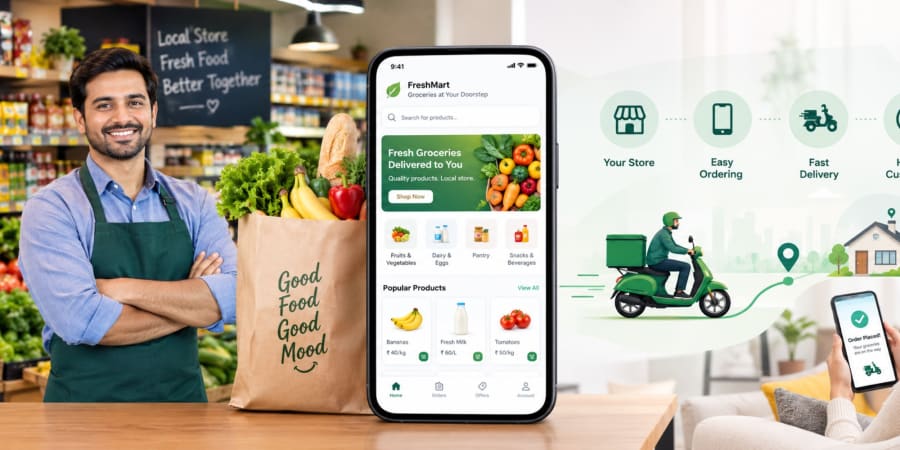
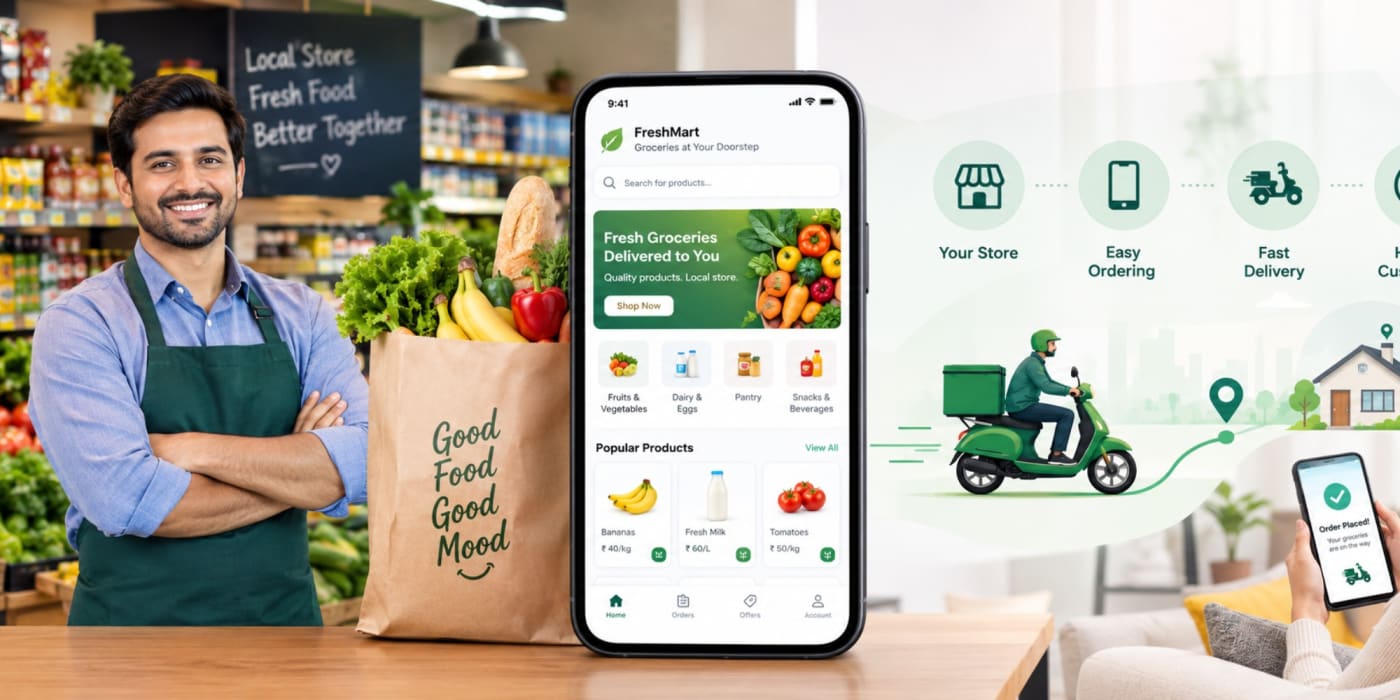
A grocery delivery app for local retailers can transform a traditional store into a digital storefront, allowing customers to browse products, place orders, make payments, and receive groceries at their doorstep. More importantly, with the right strategy, technology, and delivery operations, it can become a sustainable channel for business growth.
Rather than competing only on price or convenience, local retailers can use a dedicated digital platform to strengthen customer relationships, improve repeat purchases, and build a recognisable local brand.
Why Local Grocery Retailers Should Go Digital
Local grocery stores already have valuable advantages: established neighbourhood relationships, knowledge of customer preferences, familiar product ranges, and proximity to residential communities. A digital storefront helps bring these advantages online.
1. Reach Customers Beyond Walk-In Traffic
A physical store primarily serves customers who visit in person or contact the shop directly. A grocery delivery app gives customers another way to discover products and place orders, whether they are at home, at work, or managing a busy schedule.
Retailers can serve nearby residential communities, working professionals, families, senior customers, and others who value convenient grocery shopping. Delivery zones can be configured around practical operating distances so the business can expand without compromising service quality.
2. Make Shopping More Convenient
Customers can browse categories, search for products, review prices, add items to a cart, and choose a delivery slot without making a phone call or visiting the store. Features such as saved addresses, order history, and quick reordering make routine purchases easier.
This convenience can encourage customers to return to the same store instead of switching between multiple shopping options.
3. Build Stronger Customer Relationships
A retailer-owned app creates a direct digital channel for communicating with customers. Subject to customer consent and applicable privacy requirements, stores can share relevant offers, announce new products, provide order updates, and run loyalty programmes.
Instead of depending entirely on third-party marketplaces to connect with shoppers, retailers can build their own customer experience and develop long-term relationships.
What Makes a Grocery Delivery App Profitable?
Launching an app is only the first step. Profitability depends on how effectively the platform supports sales, controls operational costs, and encourages repeat orders.
1. A Simple and Fast Shopping Experience
Customers should be able to find everyday essentials without navigating a complicated interface. Clear product categories, useful search, readable product details, visible prices, and a straightforward checkout process help reduce friction.
For grocery shopping, small usability improvements matter. Customers should be able to locate staples, compare available options, adjust quantities, and add frequently purchased products to their carts with minimal effort.
2. Accurate Product and Inventory Management
Grocery inventory changes throughout the day, especially for fresh produce, dairy, bakery items, and high-demand essentials. An effective app should help retailers maintain accurate stock information and manage unavailable products.
Useful capabilities include:
- Product listings with images, descriptions, prices, and pack sizes.
- Category and brand-based browsing.
- Stock availability and inventory updates.
- Options for handling substitutions or out-of-stock items.
- Price and offer management.
- Support for different units, weights, and quantities where needed.
Reliable inventory information helps reduce cancelled orders, unnecessary customer calls, and disappointment at delivery time.
3. Reliable Order and Delivery Management
A successful grocery delivery operation needs more than a customer-facing app. Store staff must be able to receive orders, prepare the right items, manage substitutions, coordinate delivery, and update customers on progress.
A central order management dashboard can help retailers track incoming orders, assign preparation tasks, organise delivery slots, and monitor order status. Delivery staff may also need access to essential information such as customer addresses, delivery instructions, and contact details.
When these workflows are designed well, the business can handle more orders while maintaining a consistent customer experience.
4. Convenient and Secure Payments
Customers may prefer different payment methods depending on their location and shopping habits. A grocery app can support suitable options such as UPI, cards, and cash on delivery, depending on the retailer's requirements and payment provider.
Clear order totals, delivery charges, applicable discounts, and payment confirmation help customers feel confident at checkout. Payment integrations should be selected with appropriate security, reliability, and transaction reconciliation in mind.
Essential Features of a Grocery Delivery App
The right feature set depends on the size of the store, its delivery model, and the customers it serves. A practical starting point is to build the features that directly support ordering, fulfilment, and repeat business.
| Feature | Business benefit |
|---|---|
| Customer registration and guest checkout options | Makes it easier for new customers to start shopping. |
| Product catalogue and search | Helps customers find products quickly. |
| Cart and streamlined checkout | Reduces friction between browsing and purchase. |
| Inventory management | Improves stock accuracy and reduces cancellations. |
| Multiple payment options | Supports convenient transactions. |
| Delivery slot selection | Helps balance customer convenience with store capacity. |
| Order tracking and notifications | Keeps customers informed about order progress. |
| Admin dashboard | Provides visibility into products, orders, customers, and sales. |
| Offers, coupons, and loyalty rewards | Supports repeat purchases and targeted promotions. |
| Sales and order reports | Helps identify trends and make better operational decisions. |
Retailers do not necessarily need every advanced feature on day one. Starting with a reliable core experience and adding capabilities as demand grows can help manage investment and complexity.
How to Choose the Right Grocery App Development Approach
Every grocery business has different requirements. A single neighbourhood shop may need a relatively simple ordering platform, while a multi-branch supermarket may require centralised inventory, store-level pricing, staff permissions, and more sophisticated delivery coordination.
Option 1: Use a Third-Party Marketplace
A marketplace may help a retailer access an existing customer base and begin receiving online orders quickly. However, the business should carefully assess commission structures, customer ownership, platform rules, promotional costs, and how much control it has over the customer experience.
This approach can be useful for testing demand or reaching customers who already shop on the marketplace.
Option 2: Create a Store Website
A mobile-friendly website can be a practical starting point for retailers who want customers to browse products and place orders without installing an app. It can also support search visibility and provide a convenient link that businesses can share through local marketing channels.
For a business with straightforward fulfilment needs, a well-built website may be sufficient initially. The decision to add a mobile app can follow customer demand and operational requirements.
Option 3: Develop a Dedicated Grocery Delivery App
A dedicated app provides greater flexibility to shape the shopping journey, manage customer accounts, implement loyalty features, and connect ordering with internal operations. It can be particularly valuable for retailers with repeat customers, a defined delivery area, or plans to expand across multiple locations.
The platform may include a customer app or mobile-friendly storefront, an administration dashboard, and delivery management capabilities. Integrations with existing billing, inventory, or accounting systems can also be considered where they provide a clear business benefit.
Turn Your Local Grocery Store Into a Digital Business
With the right digital strategy, your grocery business can make ordering easier, improve customer retention, and create new opportunities for local growth.
NextCode can help you plan a grocery delivery solution around your business model, customer needs, and operational goals.
Discuss Your Grocery App ProjectHow Grocery Retailers Can Build a Sustainable Revenue Model
Revenue growth is important, but a profitable grocery delivery operation must account for the cost of fulfilling each order. Product margins, picking and packing time, delivery expenses, payment fees, discounts, and customer acquisition costs all influence the final result.
1. Encourage Repeat Purchases
Groceries are recurring purchases, making customer retention especially important. Features such as quick reorder, saved shopping lists, favourite products, and reminders based on customer preferences can make repeat shopping more convenient.
Retailers can also create loyalty programmes that reward frequent purchases without giving away too much margin. Rewards should be designed around customer behaviour and the store's actual economics.
2. Use Delivery Charges Strategically
Delivery pricing should reflect the actual cost of serving customers while remaining easy to understand. Depending on the business model, a retailer might offer a standard delivery fee, a minimum order value for free delivery, scheduled delivery options, or membership benefits for frequent shoppers.
Before introducing free delivery, calculate the average order value, product contribution margin, and delivery cost. A promotion that increases orders but loses money on every transaction may not be sustainable.
3. Increase Average Order Value
Relevant product recommendations can help customers discover complementary items. For example, a shopper buying pasta might also be interested in pasta sauce, while someone ordering breakfast ingredients may need bread, milk, or fruit.
Other practical approaches include curated grocery bundles, family essentials packs, seasonal collections, and minimum-order incentives. Recommendations should remain useful rather than making checkout feel cluttered or pushy.
4. Promote High-Value and Complementary Products
Retailers can use the digital storefront to highlight fresh produce, premium products, household essentials, local brands, and items with suitable margins. Promotions should reflect genuine customer needs and actual stock availability.
Review sales data regularly to understand which products attract customers, which items are frequently purchased together, and where promotions generate profitable additional sales.
Marketing Strategies to Attract Local Customers
A grocery app needs a steady flow of relevant local customers. Retailers can combine digital promotion with their existing community presence to build awareness and encourage first orders.
- Promote the app in-store: Display a QR code at the billing counter, on receipts, and on shopping bags so customers can access the online storefront.
- Use WhatsApp appropriately: Share an ordering link, respond to customer questions, and communicate offers with consent and in accordance with applicable messaging rules.
- Strengthen local search visibility: Keep business details, operating hours, service areas, and contact information accurate on relevant online listings.
- Run targeted local campaigns: Focus advertising on delivery areas the store can serve reliably.
- Introduce first-order offers carefully: Use a controlled introductory promotion and track whether customers place repeat orders.
- Build a referral programme: Reward existing customers for introducing new shoppers, while monitoring the cost of each acquired customer.
- Maintain service quality: Accurate orders, fresh products, reliable delivery, and responsive support encourage positive reviews and word-of-mouth recommendations.
The objective is not simply to maximise app downloads. It is to attract customers who place orders, return regularly, and contribute positively to the business.
Measure the Metrics That Matter
Once the digital storefront is operating, retailers should monitor a focused set of performance indicators. These metrics help identify what is working and where improvements are needed.
- Order volume: The number of orders received over a specific period.
- Average order value: The average amount customers spend per order.
- Repeat purchase rate: The share of customers who return to buy again.
- Order fulfilment time: How long it takes to prepare and deliver an order.
- Cancellation rate: The proportion of orders cancelled by customers or the store.
- Customer acquisition cost: The average marketing cost associated with acquiring a customer.
- Contribution per order: Revenue remaining after variable costs directly associated with fulfilling that order.
- Customer satisfaction: Feedback relating to product quality, delivery, and overall shopping experience.
For example, if orders are increasing but contribution per order is falling, the retailer may need to review discounts, delivery charges, product mix, or fulfilment costs. If many customers place one order but do not return, improvements to availability, service quality, or the repeat-purchase experience may be more valuable than additional advertising.
Common Challenges and How to Address Them
Keeping Inventory Accurate
Stock mismatches can lead to substitutions, delays, and lost trust. Establish clear inventory update processes, prioritise fast-moving products, and give customers a simple way to approve substitutions when needed.
Managing Delivery Costs
Long delivery distances and small orders can reduce profitability. Define practical delivery zones, plan delivery slots around capacity, and review the economics of different order sizes before expanding coverage.
Maintaining Product Quality
Customers expect fresh produce and grocery items to arrive in good condition. Create consistent picking and packing procedures, use suitable packaging, and provide a clear process for reporting missing or damaged products.
Building Customer Trust
Display transparent prices, delivery fees, order details, and customer support information. Protect customer data, use reputable payment providers, and establish clear policies for refunds, cancellations, and substitutions.
Managing Growth Without Operational Disruption
A sudden increase in orders can put pressure on store staff and delivery capacity. Start with a manageable service area, monitor fulfilment performance, and expand only when the underlying operation can support additional demand.
A Practical Roadmap for Launching Your Grocery Delivery App
- Define your business goals: Decide whether the priority is increasing local reach, improving repeat sales, serving multiple branches, or streamlining existing phone and messaging orders.
- Understand your customers: Identify the products they buy most often, preferred payment methods, delivery expectations, and common shopping frustrations.
- Choose the right operating model: Determine delivery areas, order minimums, delivery fees, available time slots, and who will handle picking, packing, and delivery.
- Plan the essential features: Prioritise product discovery, checkout, order management, inventory accuracy, payment processing, and customer communication.
- Develop and test the solution: Test different devices, product variations, payment outcomes, unavailable items, refunds, and real delivery workflows before launch.
- Launch within a manageable area: Introduce the service to existing customers and a focused local audience, then collect feedback and resolve early issues.
- Review performance and improve: Use order, retention, delivery, and profitability data to decide which features and service areas to expand next.
The Future of Digital Grocery Retail
Digital grocery retail is moving beyond simple online ordering. Depending on the retailer's needs, emerging opportunities include personalised product recommendations, demand forecasting, automated customer support, smarter inventory planning, and integrations that connect sales with fulfilment and reporting.
These capabilities can help retailers make more informed decisions, but technology should solve a real business problem rather than add complexity. Accurate inventory, a convenient checkout, dependable delivery, and excellent customer service remain the foundation of a successful digital grocery operation.
Local retailers do not need to replicate every feature offered by large grocery platforms. Their competitive advantage can come from local knowledge, personal service, carefully selected products, and a digital experience designed around the communities they serve.
Conclusion
A grocery delivery app can help local retailers extend their reach, improve shopping convenience, encourage repeat purchases, and build a stronger digital presence. However, long-term success depends on more than launching an app. Retailers need a well-planned product catalogue, reliable order fulfilment, transparent pricing, sensible delivery economics, and a clear customer retention strategy.
By starting with the right features, tracking meaningful business metrics, and improving the experience over time, local grocery stores can create a digital storefront that supports both customer satisfaction and sustainable growth.
Ready to take your grocery business online? NextCode can help you explore a grocery delivery app tailored to your store's operations, customers, and growth plans.
Let's Plan Your Grocery Delivery Solution
Discuss your requirements, essential features, delivery workflow, and development roadmap with the NextCode team.
Contact NextCode